6月6日雅思笔试写作真题分析+高分范文|为什么司机明知违法仍使用手机?如何有效减少分心驾驶?
- 2026-10-10 23:59:01

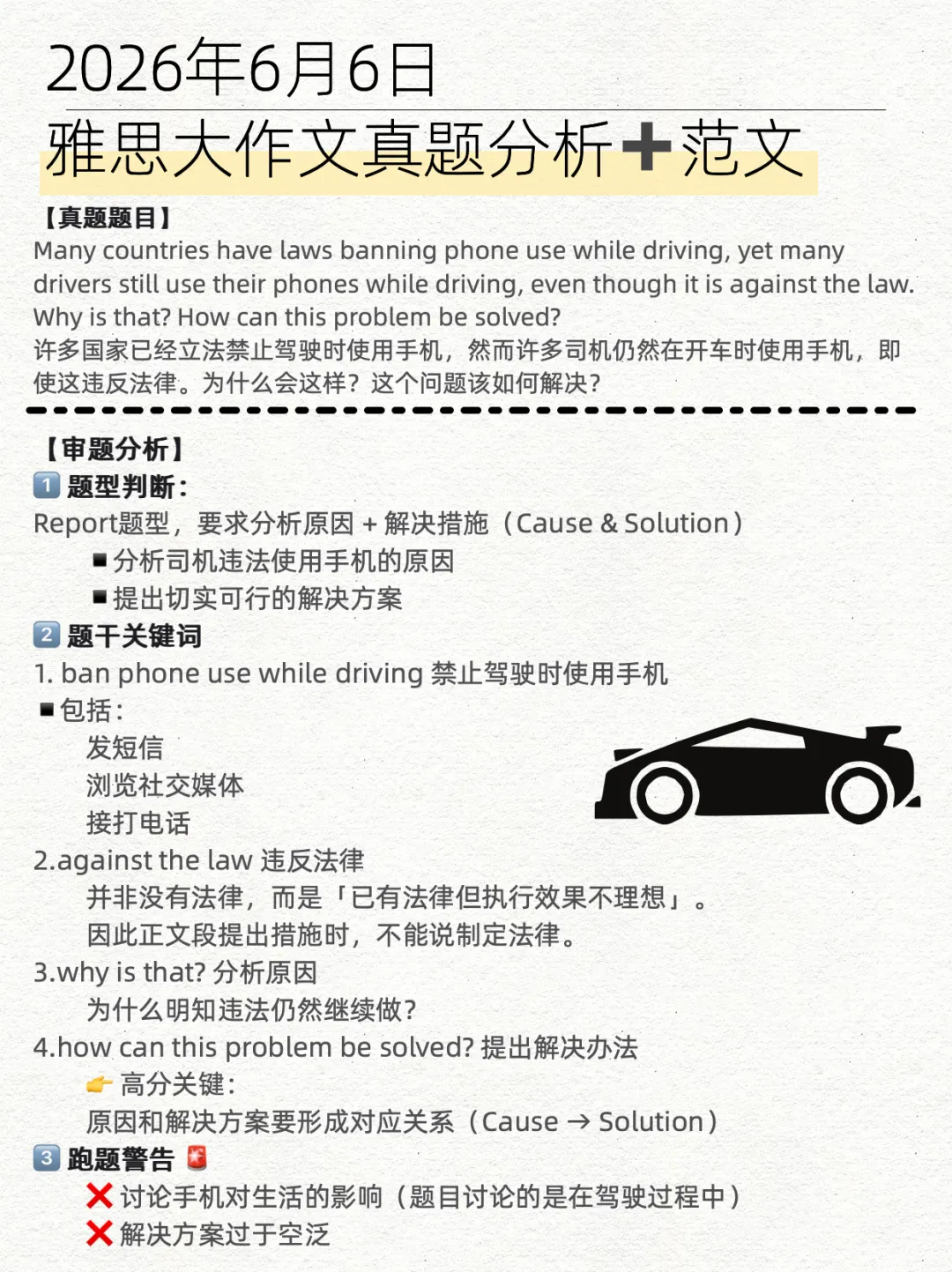
【2026.6.6 真题题目】
Many countries have laws banning phone use while driving, yet many drivers still use their phones while driving, even though it is against the law. Why is that? How can this problem be solved?
许多国家已经立法禁止驾驶时使用手机,然而许多司机仍然在开车时使用手机,即使这违反法律。为什么会这样?这个问题该如何解决?
【审题分析】
1️⃣题型判断:report题型,要求分析原因 + 解决措施(Cause & Solution)
▪️分析司机违法使用手机的原因
▪️提出切实可行的解决方案
2️⃣题干关键词
1. ban phone use while driving 禁止驾驶时使用手机
▪️包括:
发短信
浏览社交媒体
接打电话
2.against the law 违反法律
并非没有法律,而是「已有法律但执行效果不理想」。因此正文段提出措施时,不能说制定法律。
3.why is that? 分析原因
为什么明知违法仍然继续做?
4.how can this problem be solved? 提出解决办法
👉高分关键:
原因和解决方案要形成对应关系(Cause → Solution)
3️⃣跑题警告🚨
❌讨论手机对生活的影响(题目讨论的是在驾驶过程中)
❌解决方案过于空泛
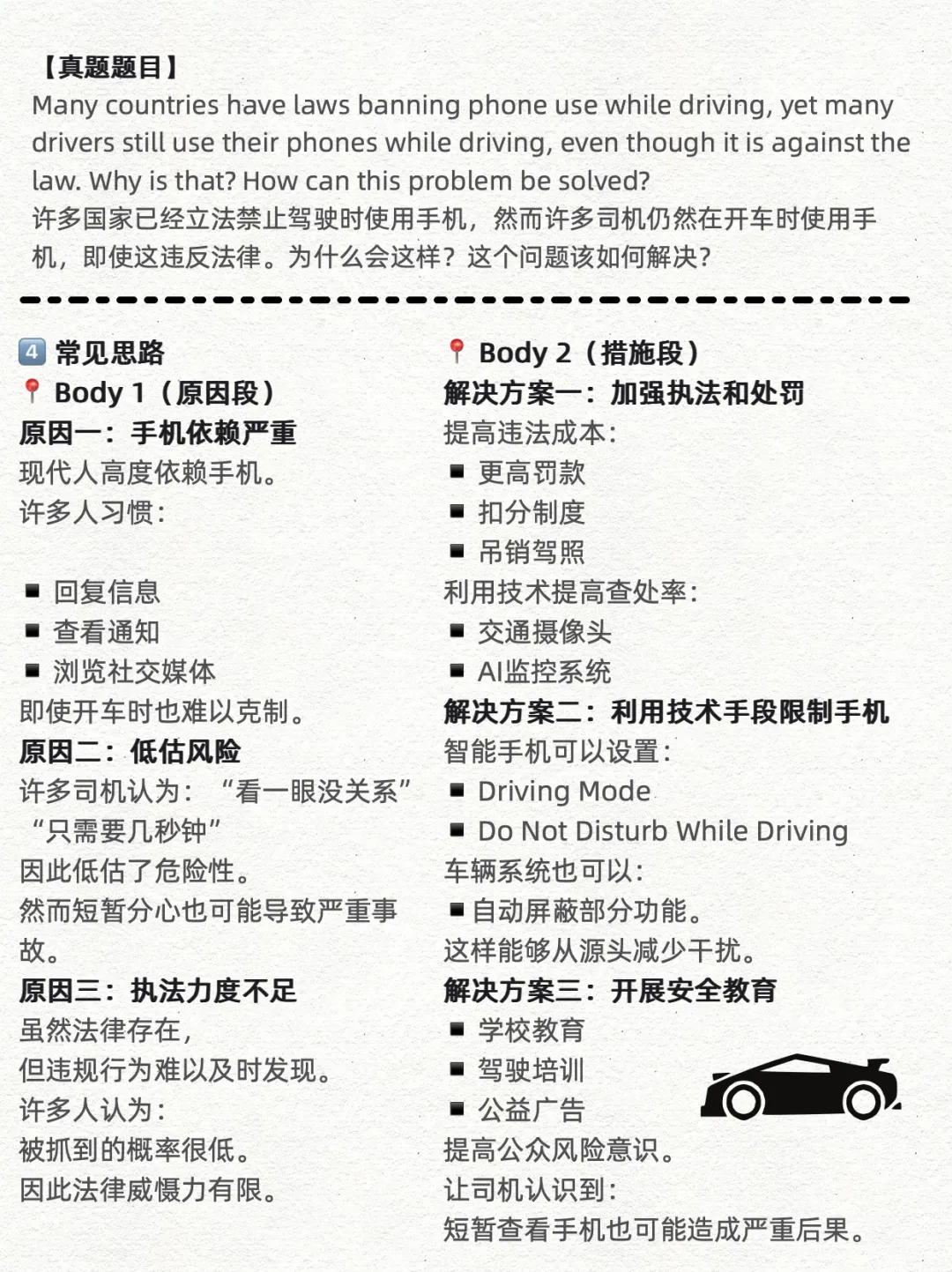
4️⃣常见思路
📍 Body 1(原因段)
原因一:手机依赖严重
现代人高度依赖手机。
许多人习惯:
▪️回复信息
▪️查看通知
▪️浏览社交媒体
即使开车时也难以克制。
原因二:低估风险
许多司机认为:“看一眼没关系”“只需要几秒钟”
因此低估了危险性。
然而短暂分心也可能导致严重事故。
原因三:执法力度不足
虽然法律存在,
但违规行为难以及时发现。
许多人认为:
被抓到的概率很低。
因此法律威慑力有限。
📍 Body 2(措施段)
解决方案一:加强执法和处罚
提高违法成本:
▪️更高罚款
▪️扣分制度
▪️吊销驾照
利用技术提高查处率:
▪️交通摄像头
▪️ AI监控系统
解决方案二:利用技术手段限制手机
智能手机可以设置:
▪️ Driving Mode
▪️ Do Not Disturb While Driving
车辆系统也可以:
▪️自动屏蔽部分功能。
这样能够从源头减少干扰。
解决方案三:开展安全教育
通过:
▪️学校教育
▪️驾驶培训
▪️公益广告
提高公众风险意识。
让司机认识到:
短暂查看手机也可能造成严重后果。
【参考范文】
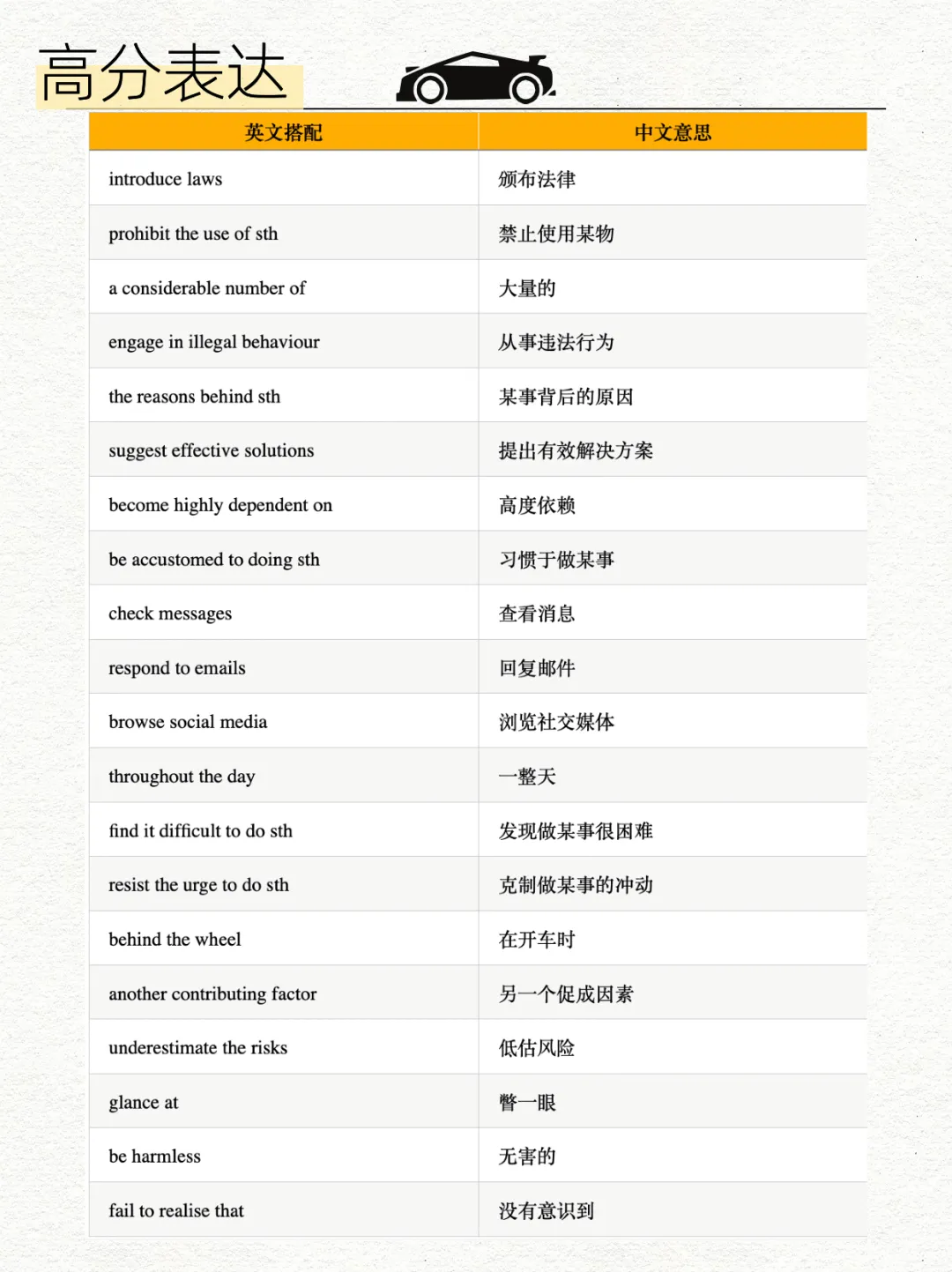
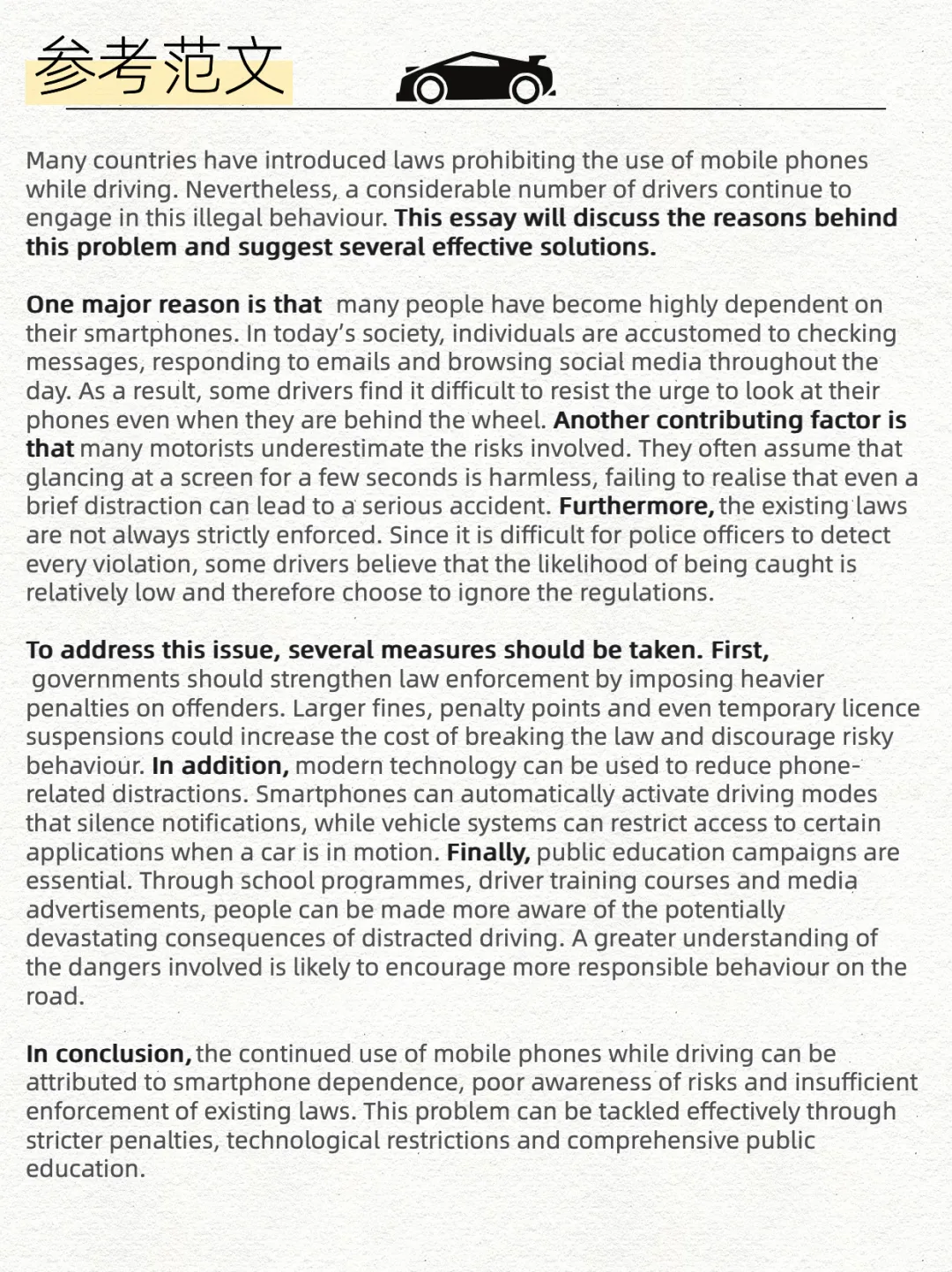
Many countries have introduced laws prohibiting the use of mobile phones while driving. Nevertheless, a considerable number of drivers continue to engage in this illegal behaviour. This essay will discuss the reasons behind this problem and suggest several effective solutions.
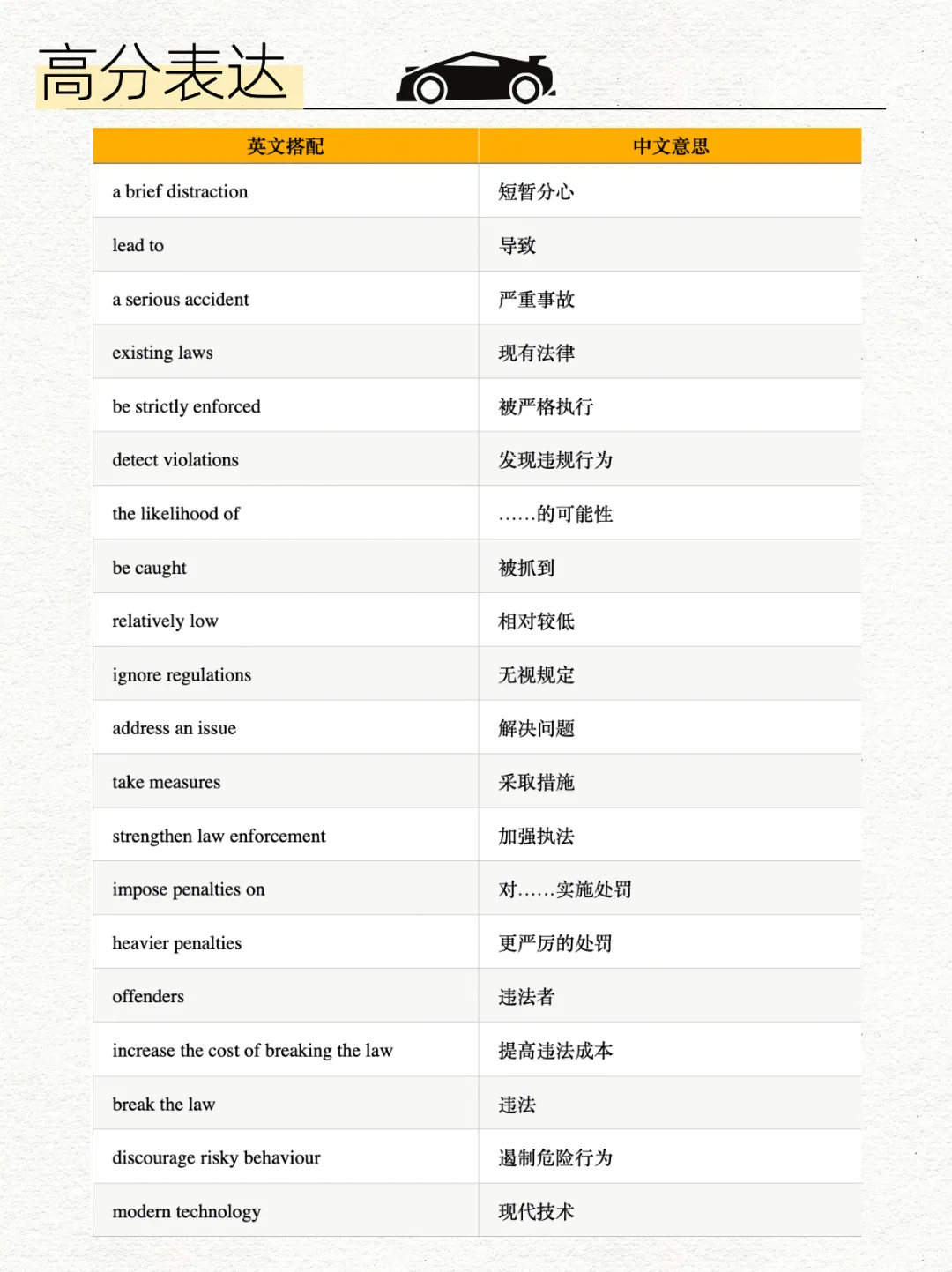
One major reason is that many people have become highly dependent on their smartphones. In today’s society, individuals are accustomed to checking messages, responding to emails and browsing social media throughout the day. As a result, some drivers find it difficult to resist the urge to look at their phones even when they are behind the wheel. Another contributing factor is that many motorists underestimate the risks involved. They often assume that glancing at a screen for a few seconds is harmless, failing to realise that even a brief distraction can lead to a serious accident. Furthermore, the existing laws are not always strictly enforced. Since it is difficult for police officers to detect every violation, some drivers believe that the likelihood of being caught is relatively low and therefore choose to ignore the regulations.
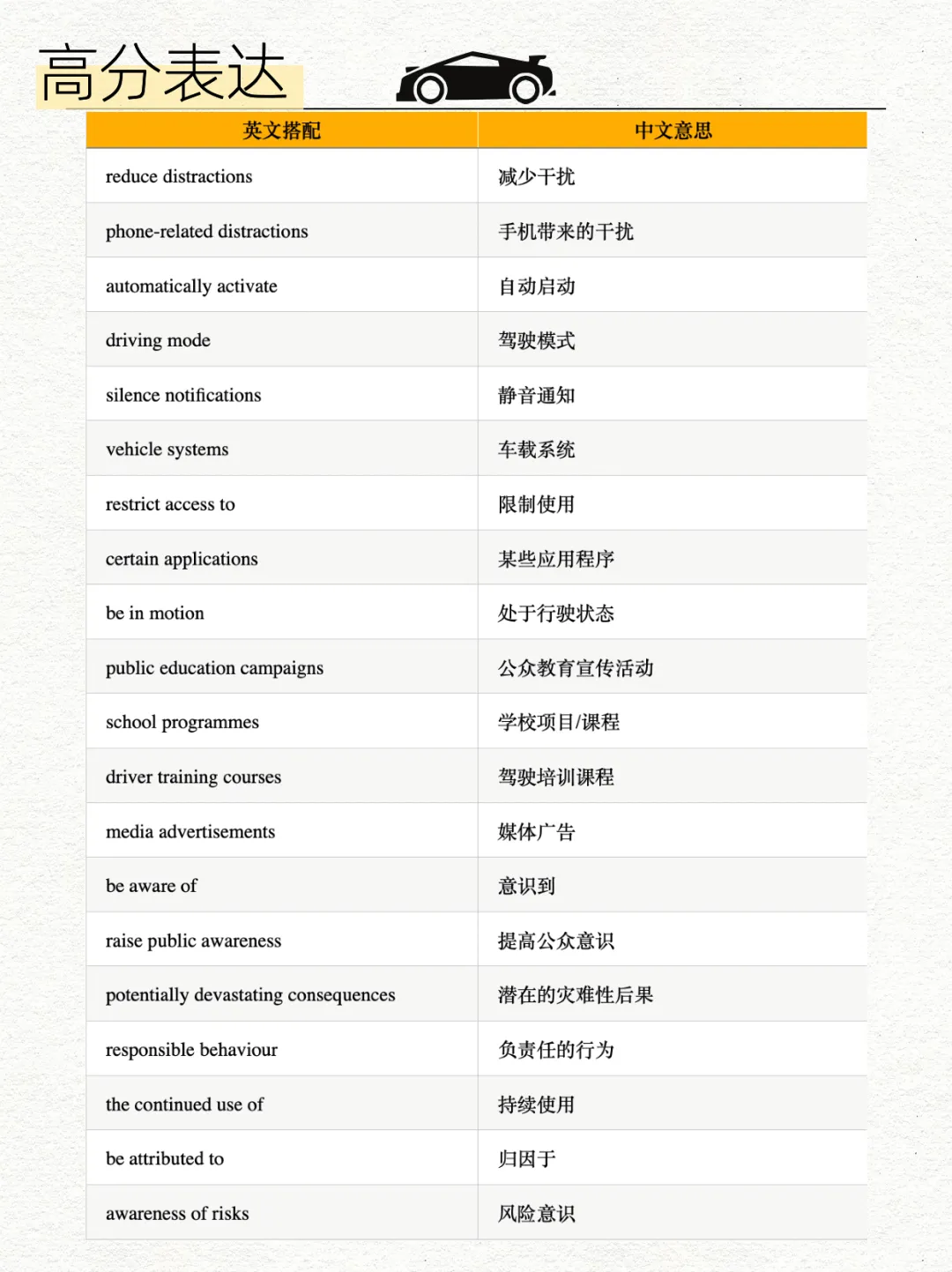
To address this issue, several measures should be taken. First, governments should strengthen law enforcement by imposing heavier penalties on offenders. Larger fines, penalty points and even temporary licence suspensions could increase the cost of breaking the law and discourage risky behaviour. In addition, modern technology can be used to reduce phone-related distractions. Smartphones can automatically activate driving modes that silence notifications, while vehicle systems can restrict access to certain applications when a car is in motion. Finally, public education campaigns are essential. Through school programmes, driver training courses and media advertisements, people can be made more aware of the potentially devastating consequences of distracted driving. A greater understanding of the dangers involved is likely to encourage more responsible behaviour on the road.
In conclusion, the continued use of mobile phones while driving can be attributed to smartphone dependence, poor awareness of risks and insufficient enforcement of existing laws. This problem can be tackled effectively through stricter penalties, technological restrictions and comprehensive public education.
【参考译文】
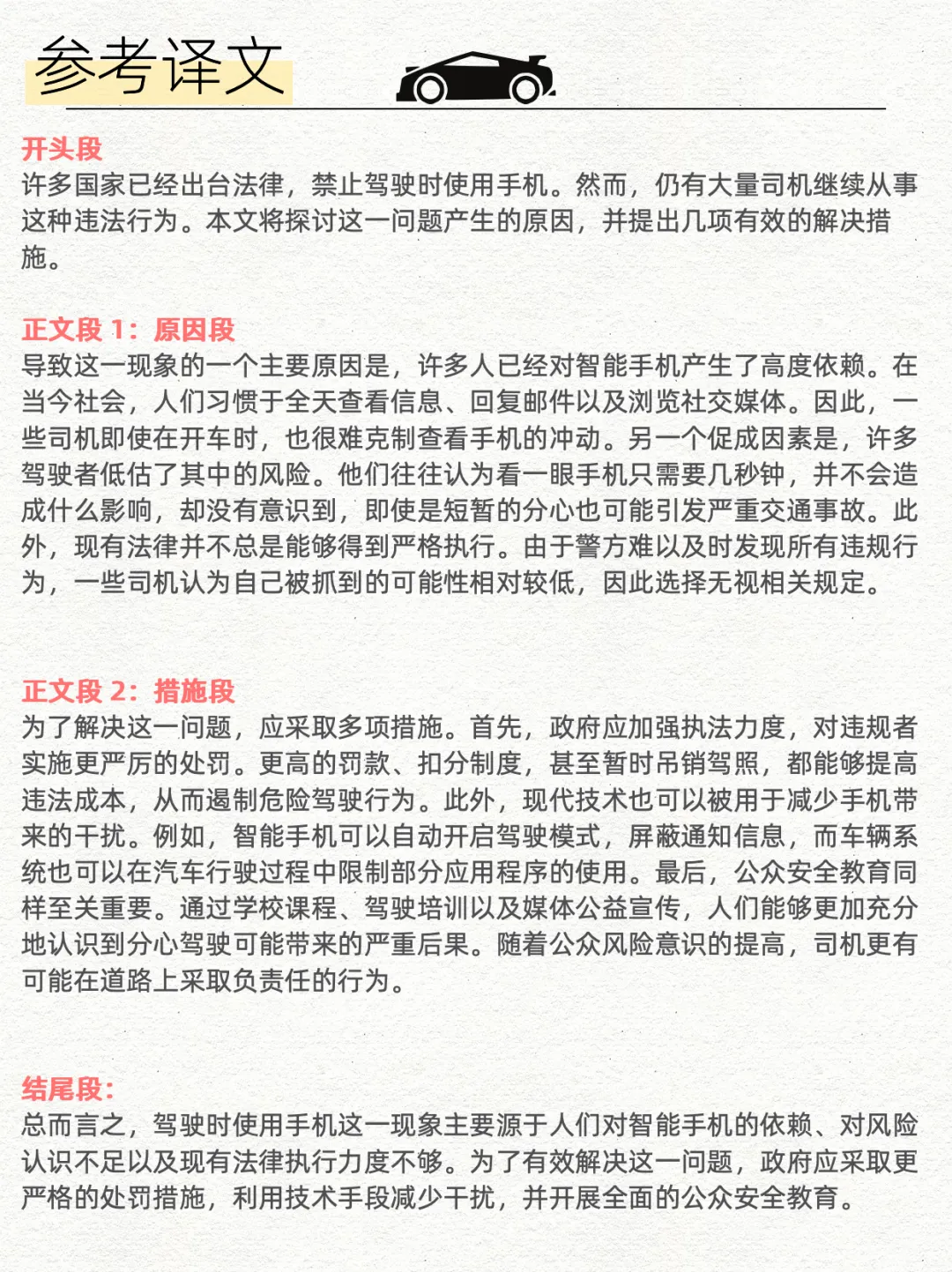
许多国家已经出台法律,禁止驾驶时使用手机。然而,仍有大量司机继续从事这种违法行为。本文将探讨这一问题产生的原因,并提出几项有效的解决措施。
导致这一现象的一个主要原因是,许多人已经对智能手机产生了高度依赖。在当今社会,人们习惯于全天查看信息、回复邮件以及浏览社交媒体。因此,一些司机即使在开车时,也很难克制查看手机的冲动。另一个促成因素是,许多驾驶者低估了其中的风险。他们往往认为看一眼手机只需要几秒钟,并不会造成什么影响,却没有意识到,即使是短暂的分心也可能引发严重交通事故。此外,现有法律并不总是能够得到严格执行。由于警方难以及时发现所有违规行为,一些司机认为自己被抓到的可能性相对较低,因此选择无视相关规定。
为了解决这一问题,应采取多项措施。首先,政府应加强执法力度,对违规者实施更严厉的处罚。更高的罚款、扣分制度,甚至暂时吊销驾照,都能够提高违法成本,从而遏制危险驾驶行为。此外,现代技术也可以被用于减少手机带来的干扰。例如,智能手机可以自动开启驾驶模式,屏蔽通知信息,而车辆系统也可以在汽车行驶过程中限制部分应用程序的使用。最后,公众安全教育同样至关重要。通过学校课程、驾驶培训以及媒体公益宣传,人们能够更加充分地认识到分心驾驶可能带来的严重后果。随着公众风险意识的提高,司机更有可能在道路上采取负责任的行为。
总而言之,驾驶时使用手机这一现象主要源于人们对智能手机的依赖、对风险认识不足以及现有法律执行力度不够。为了有效解决这一问题,政府应采取更严格的处罚措施,利用技术手段减少干扰,并开展全面的公众安全教育。